
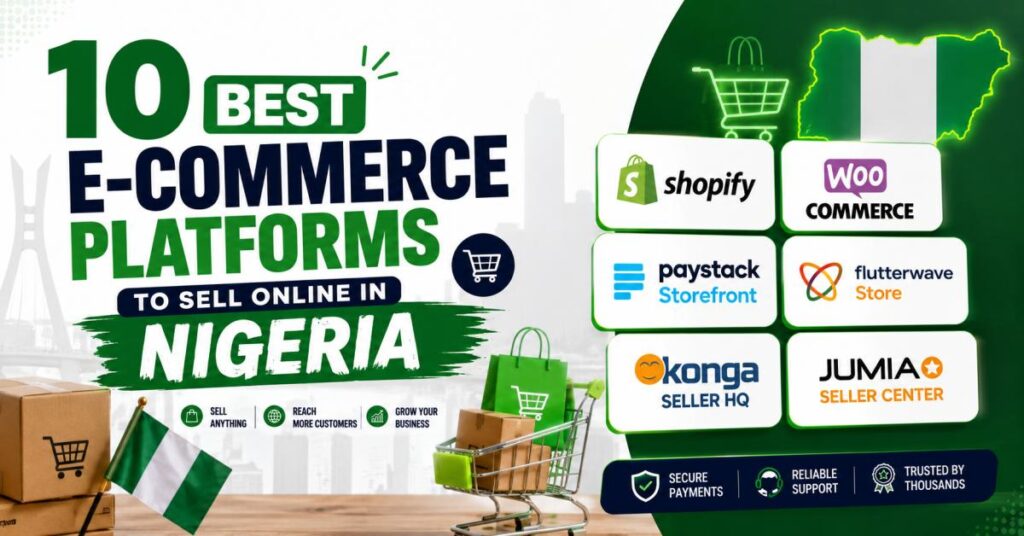
10 Best E-Commerce Platforms to Sell Online in Nigeria in 2026
Starting an e-commerce business in Nigeria in 2026 sounds exciting — and it truly is. But many Nigerians hit the same wall almost immediately: which platform do I use? With so many options flying around — Shopify, WooCommerce, Jumia, Selar, Paystack Storefront — choosing the wrong one from the best e-commerce platforms in Nigeria can cost you time, money, and customers before you’ve even made your first sale.
Add to that the very real Nigerian challenges of unreliable payment gateways, logistics headaches, and platforms that simply don’t support Naira pricing or local bank transfers, and the whole thing starts to feel overwhelming.
That’s exactly why we put this guide together. Whether you’re a student looking to sell digital products, a small business owner ready to take your hustle online, or someone planning to launch a dropshipping store, this article breaks down the best e-commerce platforms to sell online in Nigeria in 2026 — with honest comparisons, pricing, and a clear path to getting started.
You may also want to read our full guide on profitable online business ideas in Nigeria to discover other income streams you can combine with your e-commerce store.
📌 At a Glance — Best E-Commerce Platforms in Nigeria 2026
- Best Overall: Shopify — most complete, scalable, and globally trusted
- Best for Beginners: Selar or Paystack Storefront — free to set up, no coding
- Best for Dropshipping: Shopify + DSers or WooCommerce + AliDropship
- Cheapest to Start: Paystack Storefront or Flutterwave Store (both free)
- Best for Social Commerce: Flutterwave Store — share a link, sell anywhere
- Paystack & Flutterwave Integration: Shopify, WooCommerce, Selar, Ecwid, Wix
- Free vs Paid: Free platforms work for beginners; paid platforms offer more control and growth tools
- Best for Small Businesses: WooCommerce (low cost, full control) or Selar (digital products)
What Is an E-Commerce Platform and How Does It Work in Nigeria?
An e-commerce platform is software that allows you to build an online store, list your products, accept payments, and manage orders — all in one place. Think of it as your own virtual shop on the internet, open 24/7, accessible to anyone across Nigeria (and beyond).
In simple terms, here’s how it works: you sign up on a platform, upload your products with photos and prices, connect a payment method like Paystack or Flutterwave, and then share your store link with customers. When someone places an order, you receive a notification, package the item, and ship it through a delivery service.
Types of E-Commerce Platforms
- Hosted Platforms (SaaS): Shopify, Wix, BigCommerce — the platform hosts your store. Easy to set up but you pay monthly.
- Self-Hosted Platforms: WooCommerce on WordPress — you own the server and software. More work, but cheaper long-term and fully customisable.
- Marketplace Platforms: Jumia Seller Center, Konga Seller HQ — you sell on their existing marketplace. Instant traffic, but high competition and fees.
- Payment-linked Storefronts: Paystack Storefront, Flutterwave Store — free stores tied directly to payment gateways. Great for beginners.
- Creator/Digital Platforms: Selar — designed specifically for digital products like ebooks, courses, and webinars.
Why Nigerians Are Moving Into Online Selling in 2026
Internet penetration in Nigeria has grown significantly, with over 100 million active internet users. Smartphone adoption is high, social media shopping is mainstream, and platforms like Paystack, Flutterwave, and Moniepoint have made online payments accessible to everyday Nigerians. The result? A booming environment for online marketplace Nigeria businesses of all sizes.
10 Best E-Commerce Platforms to Sell Online in Nigeria in 2026
Below are the best platforms reviewed for the Nigerian market — covering pricing, ease of use, payment support, and who each platform works best for. Whether you want to create an online store in Nigeria or just start selling without a full store, there’s a fit here for every level.
1. Shopify
Best OverallShopify is the world’s most popular e-commerce platform and one of the best online selling platforms in Nigeria. It offers everything you need in one place: a beautiful store builder, inventory management, SEO tools, and seamless payment integration through Paystack and Flutterwave.
Shopify is ideal for serious sellers who want a professional, scalable store. It’s also the top platform for dropshipping in Nigeria thanks to apps like DSers and Zendrop.
2. WooCommerce
Best for Budget & ControlWooCommerce is a free WordPress plugin that turns any WordPress website into a full e-commerce store. It’s the most popular self-hosted solution globally and a favourite for affordable e-commerce platforms for small businesses in Nigeria.
You’ll need to pay for web hosting (roughly ₦5,000–₦15,000/month) and a domain name, but the core platform is free. Paystack and Flutterwave both have official WooCommerce plugins.
3. Selar
Best for Digital ProductsSelar is a Nigerian-built platform specifically designed for selling digital products online in Nigeria — ebooks, online courses, paid communities, webinars, and coaching packages. It’s extremely beginner-friendly and requires no coding whatsoever.
Selar handles payment processing, file delivery, and customer management automatically. You can start for free and only pay transaction fees (5%) when you earn.
4. Paystack Storefront
Best Free OptionPaystack Storefront is a completely free online store builder attached to your Paystack account. It allows you to list physical and digital products, share your store link on social media, and receive payments directly to your Paystack balance. No monthly fees, no subscription.
This is the cheapest platform to sell online in Nigeria — literally free. You only pay standard Paystack transaction fees (1.5% local, 3.9% international).
5. Flutterwave Store
Best for Social CommerceFlutterwave Store is another free storefront linked to your Flutterwave account. It’s extremely popular among Nigerian sellers who take orders through WhatsApp, Instagram, and Twitter because you can generate a simple link and collect payment instantly.
6. Jumia Seller Center
Best Marketplace ReachJumia is Nigeria’s largest e-commerce marketplace, and becoming a Jumia seller means instant access to millions of active shoppers. You don’t need to build a store — just list your products and Jumia handles delivery through its logistics network.
The downside is high competition, Jumia’s commission fees (ranging from 5–25% depending on category), and limited control over branding.
7. Konga Seller HQ
Growing Nigerian MarketplaceKonga is Nigeria’s second-largest online marketplace. Konga Seller HQ allows Nigerian merchants to list products and reach Konga’s active customer base. Like Jumia, it handles logistics through KongaPay and its delivery network.
8. Wix eCommerce
Best Drag-and-Drop BuilderWix is known for its drag-and-drop website builder, and its e-commerce features are solid for small to medium online stores. It supports Paystack and offers beautiful templates. However, it can become expensive at higher plans and has some limitations for large inventories.
9. Ecwid by Lightspeed
Best Add-On StoreEcwid is unique because it lets you add a store to any existing website, social media page, or even a Facebook page. It has a forever-free plan for up to 5 products — great for testing the waters. Paystack integration is available through plugins.
10. BigCommerce
Best for Scaling UpBigCommerce is a powerful platform for stores with large inventories and high sales volumes. It offers advanced SEO tools, multi-channel selling, and no transaction fees. However, it’s more expensive and complex — better suited to established businesses than beginners.
Quick Comparison Table — E-Commerce Platforms in Nigeria 2026
| Platform | Monthly Cost | Paystack/Flutterwave | Free Plan | Best For |
|---|---|---|---|---|
| Shopify | From $29 | ✅ Both | Trial only | Serious sellers, dropshipping |
| WooCommerce | Hosting only (~₦5k+) | ✅ Both | ✅ Plugin is free | Small businesses, blogs |
| Selar | Free or ₦6k/mo | ✅ Built-in | ✅ Yes | Digital products, courses |
| Paystack Storefront | Free | ✅ Paystack | ✅ Always free | Beginners, side hustlers |
| Flutterwave Store | Free | ✅ Flutterwave | ✅ Always free | Social media selling |
| Jumia Seller Center | Commission (5–25%) | Jumia Pay | ✅ Free to list | High-volume physical goods |
| Wix eCommerce | From $17 | ✅ Paystack | ❌ No | Boutiques, service shops |
| Ecwid | Free or $25+ | ✅ Paystack plugin | ✅ Up to 5 products | Add-on stores, bloggers |
| BigCommerce | From $39 | ✅ Paystack | Trial only | Large/scaling stores |
| Konga Seller HQ | Commission-based | KongaPay | ✅ Free to join | Electronics, fashion |
If you’re interested in exploring other ways to earn money online alongside your store, check out our list of proven ways to make money online in Nigeria in 2026.
How to Start an Online Store in Nigeria in 2026 (Step-by-Step Guide)
Starting your e-commerce journey in Nigeria doesn’t have to be complicated. Follow these steps to go from zero to your first sale:
-
Choose a Profitable Product to Sell
Research what Nigerians are actively buying online. Popular categories include fashion, electronics accessories, beauty products, digital products (ebooks, courses), food items, and household goods. Validate demand using Google Trends, Jumia’s bestsellers, or social media search.
-
Select the Right E-Commerce Platform
Use this guide to pick the platform that matches your budget, product type, and technical comfort level. Beginners should start with Selar, Paystack Storefront, or WooCommerce. If you’re going into dropshipping, Shopify is the gold standard.
-
Register a Domain Name
A custom domain (e.g., yourstore.com.ng) looks more professional and builds trust. Nigerian domains (.com.ng) cost around ₦5,000–₦6,000/year. You can register through TrueHost, Whogohost, SmartWeb Nigeria, or Namecheap.
-
Set Up Payment Gateways
Connect Paystack or Flutterwave to accept card payments, bank transfers, and USSD. Both support NGN and are widely trusted by Nigerian buyers. Set up your bank account for withdrawals before you launch.
-
Upload Your Products with Great Photos and Descriptions
Use clear, high-quality photos taken in good lighting. Write honest, detailed product descriptions that answer common buyer questions. Include dimensions, materials, variants, and delivery timeframes.
-
Configure Delivery and Shipping Options
Partner with logistics companies like GIG Logistics, DHL Nigeria, Sendbox, or Kwik Delivery. Set clear delivery timelines and costs. Consider offering free delivery for orders above a certain amount to boost conversions.
-
Optimise Your Product Pages for SEO
Use relevant keywords in your product titles and descriptions. Write meta descriptions. Add alt text to images. If you’re on WooCommerce or Shopify, install an SEO plugin or app to help rank your products on Google.
-
Promote Your Store Using Social Media and Ads
Use Instagram, TikTok, WhatsApp Business, and Facebook to showcase your products. Run targeted Meta Ads starting from as low as ₦1,000/day. Collaborate with micro-influencers in your niche for faster growth.
-
Manage Orders and Provide Excellent Customer Service
Respond to inquiries quickly — Nigerian buyers expect fast responses. Use WhatsApp Business auto-replies, provide tracking numbers, and follow up after delivery. Good reviews drive repeat sales and referrals.
If you need help funding your start-up costs, see our guide on the best loan apps in Nigeria in 2026 to find trusted options.
How Much Does It Cost to Start an E-Commerce Business in Nigeria?
One of the biggest concerns for Nigerians thinking about starting an online store is cost. Here’s a realistic breakdown of what you might spend — from the absolute minimum to a more professional setup.
Domain Name
.com.ng or .com domain from Whogohost or Namecheap
Web Hosting (if needed)
Required for WooCommerce/self-hosted platforms
Platform Subscription
Free (Paystack Storefront, Selar free) to premium (Shopify, BigCommerce)
Inventory / Products
Depends on product type. Digital products = ₦0 inventory cost
Logistics & Delivery
GIG Logistics, Sendbox, Kwik Delivery rates vary by state
Marketing Budget
Meta Ads, influencer partnerships, WhatsApp marketing
How Much Can Nigerian Online Sellers Earn?
Income from e-commerce in Nigeria varies widely. Many beginners make ₦30,000–₦100,000 in their first month. Established online stores often generate ₦300,000–₦2,000,000+ monthly. See our detailed guide on how to make ₦100k monthly online in Nigeria for more context.
Profit margins depend heavily on your product category. Digital products have the best margins (70–90%) since there’s no inventory or shipping cost. Physical products typically have 20–50% margins after costs.
Common E-Commerce Scams Nigerians Should Avoid
- Fake payment alerts: A buyer sends a fake Paystack/Flutterwave SMS or email to trick you into releasing goods before actual payment is confirmed. Always verify payments inside your dashboard, never from screenshots or alerts alone.
- Fraudulent suppliers: Suppliers who collect payment and disappear, or send inferior goods. Always verify suppliers, request samples, and use escrow for large orders.
- Chargeback scams: Buyers pay with stolen cards, receive goods, and then the card owner reverses the charge. Use address verification and be cautious with high-value first-time orders.
- Fake “done-for-you” store agencies: Companies that promise to set up a “fully automated dropshipping store making $500/day” for an upfront fee. These are almost always scams targeting beginners.
- Phishing websites: Sites that look like Jumia, Konga, or Paystack but are designed to steal your login credentials. Always verify URLs before entering details.
- Social media impersonators: Fake accounts pretending to be established Nigerian e-commerce stores, collecting payments without delivering goods.
Learn more about protecting your online business in our comprehensive guide on making money online in Nigeria without losing your investment.
Common Mistakes New Online Sellers Make in Nigeria
- ❌Choosing the wrong platform for their product type. Selling physical goods on Selar (built for digital products) creates unnecessary friction. Match your platform to your product.
- ❌Ignoring mobile optimisation. Over 80% of Nigerian internet users browse on mobile phones. A store that’s hard to use on mobile loses the majority of potential buyers.
- ❌Poor product descriptions and low-quality photos. Buyers can’t touch or smell your product — your photos and descriptions must do all the selling. Invest time here.
- ❌No delivery strategy. Promising “fast delivery” with no logistics partner in place leads to delayed orders, bad reviews, and refund requests.
- ❌Depending only on Instagram sales. Instagram can be shut down, throttled, or your account banned at any time. Your store should be a separate, owned asset.
- ❌Not using SEO. If your store doesn’t appear on Google when people search for your products, you’re missing free organic traffic. Use keywords in your titles and descriptions.
- ❌Bad pricing strategy. Pricing too low undervalues your product and kills your margin. Pricing too high without justification loses customers. Research competitor pricing thoroughly.
- ❌Poor customer service. Ignoring DMs, delayed responses, and refusing refunds on genuine complaints destroys reputation quickly in Nigeria’s social-media-driven market.
For tips on how to actually make consistent income from your online store, see our guide on passive income ideas for Nigerians online.
Frequently Asked Questions — E-Commerce Platforms in Nigeria
Which is the best e-commerce platform in Nigeria in 2026?
The best overall platform is Shopify for serious sellers who want a fully-featured store with growth tools. However, for beginners, Selar (digital products) or Paystack Storefront (physical + digital) are the easiest and cheapest places to start. The “best” platform depends on your product type, budget, and goals.
Can I start an online store in Nigeria without coding?
Absolutely yes. Platforms like Selar, Paystack Storefront, Flutterwave Store, Shopify, and Wix require zero coding skills. You simply sign up, upload your products, connect a payment method, and share your store link. Even WooCommerce can be set up without coding using page builders like Elementor.
What is the cheapest platform to sell online in Nigeria?
Paystack Storefront and Flutterwave Store are both completely free — no monthly fees, no listing fees. You only pay standard transaction fees (1.5–3.9%) when you make a sale. Selar also has a free plan with a 5% transaction fee.
Which e-commerce platform supports Paystack and Flutterwave?
Shopify, WooCommerce, Wix, Ecwid, Selar, and BigCommerce all support Paystack and/or Flutterwave through official integrations or plugins. Paystack Storefront and Flutterwave Store have their respective gateways built-in by default.
Is Shopify available in Nigeria?
Yes, Shopify is fully available in Nigeria. Nigerian sellers can create a Shopify store, accept payments in Naira via Paystack or Flutterwave, and sell both locally and internationally. The main cost is the monthly subscription (from $29/month), which needs to be paid in USD.
How much money do I need to start an e-commerce business in Nigeria?
You can start with as little as ₦0 using Paystack Storefront or Selar’s free plan — especially if you’re selling digital products like ebooks or courses. For a more professional physical product store with hosting, domain, and inventory, budget between ₦30,000–₦100,000 to start comfortably.
Conclusion — Choose the Right Platform and Start Selling Today
The Nigerian e-commerce industry is growing faster than ever in 2026, and the window to establish your brand online is wide open. The good news is that no matter your budget, technical skill level, or product type, there is an e-commerce platform built for you.
If you’re a complete beginner, start with Paystack Storefront or Selar — both free, both beginner-friendly, and both built for Nigeria. If you’re a small business owner ready to invest, WooCommerce gives you maximum control at low cost. If you’re serious about scaling or dropshipping, Shopify is your best long-term bet. For instant access to millions of Nigerian buyers with zero store setup, Jumia and Konga remain powerful marketplace options.
The biggest mistake is waiting. Start small, be consistent with your marketing, deliver excellent customer service, and grow from there. Nigerian e-commerce success stories didn’t happen overnight — but they all started with one step.
You may also find useful resources in our guides on how to start freelancing in Nigeria, how to make ₦100 daily online in Nigeria, and online hustles for Nigerian students.
Ready to Start Selling Online in Nigeria?
Choose the right e-commerce platform today, launch your online store, and start building a profitable business in 2026. NaijaMonie has all the guides you need to succeed.
More Helpful Guides on NaijaMonie
- Complete Guide: How to Make Money Online in Nigeria in 2026
- Beginner’s Guide to Starting Dropshipping in Nigeria
- Profitable Online Business Ideas for Nigerians
- Best Passive Income Ideas for Nigerians Online
- How to Make ₦100k Monthly Online in Nigeria
- How to Start Freelancing in Nigeria in 2026
- Best Online Hustles for Nigerian Students
- Make Money Online in Nigeria Without Investment
Recently Published
-
 Best Freelancing Platforms for Nigerians in 2026 Best Freelancing Platforms for Nigerians in 2026 (Earn Online) Best Freelancing Platforms for Nigerians in 2026 … May 7, 2026
 -
 4 Websites That Pay You to Read and Review Books in Nigeria (2026) 4 Websites That Pay You to Read and Review Books in Nigeria (2026) … May 5, 2026
More Helpful Guides
-
Best Freelancing Platforms for Nigerians in 2026 Best Freelancing Platforms for Nigerians in 2026 (Earn Online) Best Freelancing Platforms for Nigerians in 2026 … May 7, 2026
-
4 Websites That Pay You to Read and Review Books in Nigeria (2026) 4 Websites That Pay You to Read and Review Books in Nigeria (2026) … May 5, 2026
-
 How to Start a Blog in Nigeria and Make Money (Beginner's Step-by-Step Guide) How to Start a Blog in Nigeria and Make Money (Beginner's Step-by-Step Guide) Beginner's Guide · NaijaMonie … May 4, 2026
Discover More Legit Ways to Make Money Online in Nigeria
Explore our growing library of beginner-friendly guides on online income, paying apps, side hustles, freelancing, blogging, digital marketing, business ideas, passive income, and more.
